
Create real empathy with your audience using this practical framework for targeted, effective communications.
You’ve spent months producing a comprehensive report with groundbreaking findings. The science is solid. The insights could significantly impact your field.
You’ve shared it everywhere: website, social media, newsletter, emails, webinars. You dotted all the i’s and crossed the t’s.
And then… Crickets.
What happened? Why didn’t the report gain the traction you expected?
In countless cases, the answer comes down to a fundamental communications principle: know your audience. We are deeply passionate about our topic and pour that passion into the work. However, if we don’t clearly demonstrate how this work matters to our audience, they will simply tune it out.
Personas: A tool for audience empathy
All too often, understanding our audience is skipped entirely or treated like a check-the-box activity.
“Who’s our target audience?”
“Policy makers, scientists, and community members.”
Check! “Great, let’s move on to implementation.”
We’ve seen the result of this rushed box-checking exercise: audience apathy.
If your product isn’t targeted to their needs, it might as well not exist. At best, they download your PDF to their computer, fully intending to read that thing. But let’s face it, most of the time it ends up in the PDF graveyard.
How can we gain a deeper and practical understanding of our audience? The user persona is a tool widely used in marketing and user experience design to document real needs of target customers.
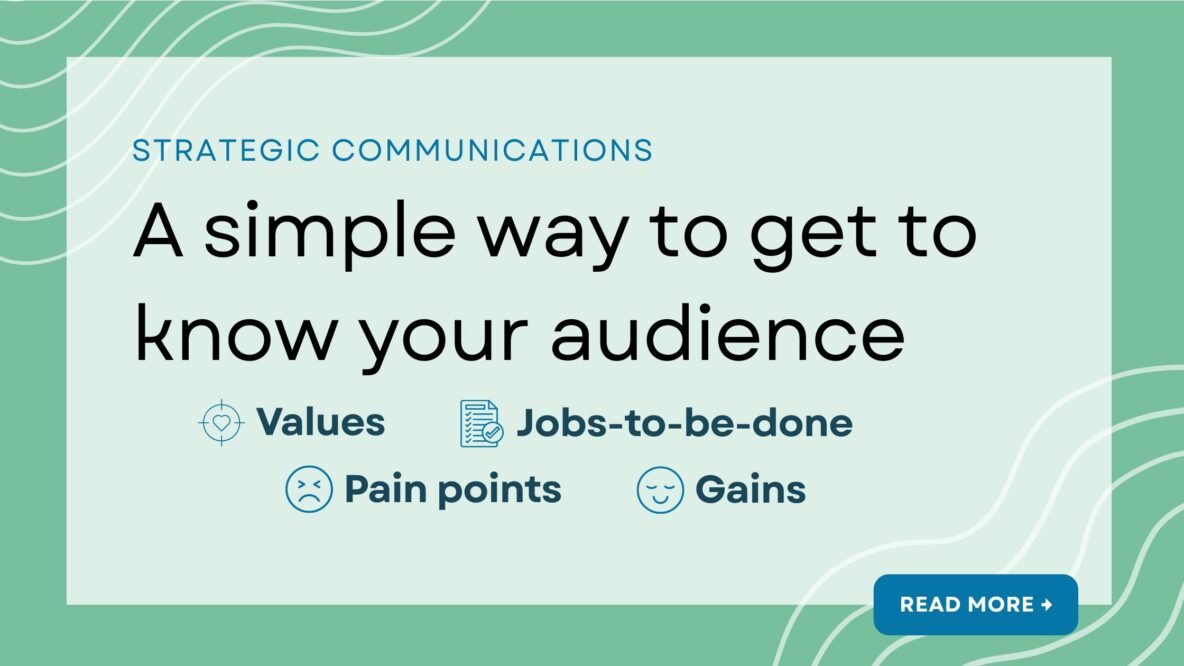
Personas compile a set of characteristics about a group of people that you’d like to reach. While there are many variations, we’ll look at a simple approach to creating personas, covering four main areas: values, jobs-to-be-done, pain points, and desired gains.
Let’s take a look at each component.
Values: Their fundamental worldview
Let’s go back to those three target audiences mentioned above. Each of them holds a set of beliefs and perspectives that inform how they see the world and make decisions. Their values are the lens through which they evaluate every effort to get their attention.
The policy makers might consider public service as a core value and are adamant about making decisions based on data. The scientists likely value the generation and sharing of knowledge very highly, along with data integrity and methodological rigor. The community members could be concerned with collective wellbeing and respect for their culture and traditions.
However, within each of these groups, there are always different perspectives and ideologies. Which is why it’s critical to speak with people you want to reach and hear in their words what matters to them.
Our messaging stands a much better chance of reaching them when we understand and empathize with their values. The same message heard by these different groups might work for one and fall flat for the others.
Jobs-to-be-done: What they do all day
The next category of interest is “jobs-to-be-done”: your audience members’ daily tasks, responsibilities, and deadlines.
The policy makers’ jobs might include drafting legislation, securing funding for programs, and responding to constituents. The scientists in our audience likely have jobs-to-be-done such as conducting research, applying to grants, and submitting their work to journals. The community members would have a range of responsibilities, including earning income, childcare, gathering day-to-day resources, and attending local council meetings.
When you understand these daily realities, you can position your message as directly relevant to their work. Instead of asking them to care about your issue in the abstract, you’re showing them how it relates to tasks already on their to-do list.
Pain points: What frustrates them
Pain points are the barriers, frustrations, and annoyances that make it hard for people to achieve their goals — things that keep them awake at night.
We all pay much greater attention to problems, a tendency called the Negativity Bias. Recognizing this bias, we would be wise to understand and empathize with our audience’s pain points.
For policy makers, pain points might include political opposition to their policies, public misunderstandings, and insufficient funding. For scientists, they might be facing frustrations like intense pressure to publish, limited funding, and difficulties in accessing quality data for their research. Community members‘ concerns could include income instability, being excluded from decisions, and natural resource degradation.
When your messaging acknowledges pain points and offers a way to address them, you become a partner in solving their problems.
Gains: What success looks like
The final piece of the user persona concerns their gains: goals, aspirations, and vision of success. While pain points show what people want to avoid, gains reveal what they’re striving toward.
Policy makers’ gains could be achieving policy goals, measurable constituent satisfaction, and media coverage. Scientists might seek to publish in top journals, securing tenure, and receiving invitations to speak at conferences. Community members’ gains could include financial security, better education opportunities for their children, and land ownership.
Understanding gains helps you position your work as not just solving problems, but helping people achieve their ambitions. You’re offering a path to success.
Putting personas to work
How do we gather these insights for our user personas? Go out and talk to them. Ask questions and listen — mostly listen. Seek to understand what really matters to them. A single 30-minute conversation can yield tremendous insight into what drives someone’s decisions.
Can’t do interviews (yet)? When it’s hard to speak with your audience, start with group brainstorming sessions with your team. You can even use AI to generate initial personas, though of course you should treat these as hypotheses to test rather than definitive truth.
In both of these cases, you should always validate your assumptions at some point by speaking to real people.
The effort pays off. Instead of creating generic messages that try to appeal to everyone, you’ll craft specific communications that resonate with the people who matter most to your mission. User personas will help you plan your comms with empathy for your audience. They will notice the difference.
Access this template to capture your user persona insights: